Blog

  • Design as a Process of Learning and Transformation

    Design as a Process of Learning and Transformation

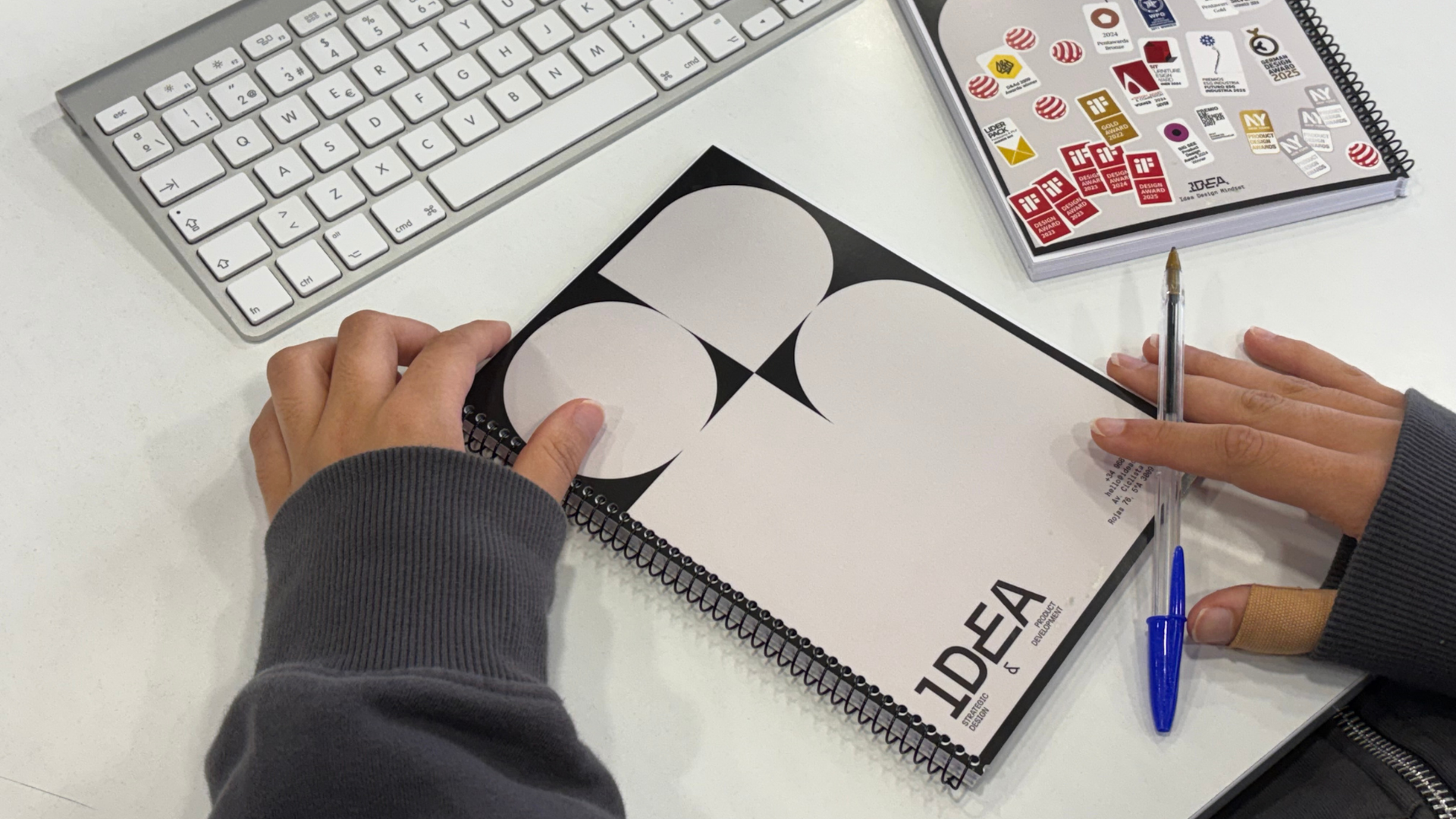
    At IDEA, we understand design as a process that goes beyond the tangible. It’s not only about what we create, but about how that process transforms the way we think, observe, and connect with the world.

    Over the past few months, this process has also taken shape through the Eurodisea program, integrating international talent into our daily work and creating a space for shared learning.

    The incorporation of a graphic design intern into the team has been much more than a training experience. It has been an opportunity to activate new perspectives, challenge the established, and reinforce something essential within our Design Mindset: design as a tool for continuous evolution.

    At IDEA, we believe that training is also a form of design.
    Designing contexts where people can explore, iterate, and develop their potential through real practice. Because it is in the act of doing where ideas become impact.

    These types of initiatives not only foster professional development, but also strengthen the connection between cultures, disciplines, and different ways of understanding design. And it is precisely at this intersection where the most relevant solutions emerge.

    This initiative has been made possible thanks to the support of the Eurodisea program, co-funded by the European Union through the European Social Fund Plus (ESF+), which aims to promote mobility, learning, and the development of young talent across Europe.

    At IDEA, we continue to design from a people-centered perspective, understanding each process as an opportunity to create real impact.

  • From Prototype to Investable Company: Designing Devices Investors Trust

    From Prototype to Investable Company: Designing Devices Investors Trust

    This is Part 4 of a 4-part series on why medical devices stall after early prototypes, and how to build a strategy-grade architecture that survives MDR, scales industrially, and protects investment.

    Part 1 introduced the core thesis: devices rarely fail in the lab; they fail when early decision architecture is fragile.
    Part 2 reframed MDR as a design layer.
    Part 3 explored connected devices as governed systems.

    This final chapter focuses on the moment where many promising technologies stall: the transition from working prototype to investable company.

    A working prototype proves feasibility.
    It does not prove viability.

    In MedTech, the distance between those two realities is where many projects quietly lose momentum.

    Investors rarely fund technology alone.
    They fund structured predictability.

    A device may demonstrate strong clinical performance and still remain fragile if the surrounding architecture does not support certification, industrial scaling, and long-term lifecycle management.

    What investors actually evaluate

    Experienced MedTech investors rarely begin with product features.

    They begin with structure.

    They look for signals that the development has been architected for longevity:

    • Regulatory clarity: classification logic and certification strategy defined early.
    • Industrial scalability: manufacturing processes and supply chain constraints considered from the start.
    • Economic coherence: cost structure aligned with reimbursement environments.
    • Intellectual property protection: defensibility embedded in both technology and architecture.
    • Lifecycle governance: updates, monitoring, and post-market responsibilities clearly defined.

    These signals indicate that the project is not simply an innovation experiment.

    It is an emerging company.

    Where projects begin to break

    Many teams build prototypes optimized for demonstration rather than production.

    Mechanical assemblies become too complex to manufacture.
    Component choices create supply chain fragility.
    Firmware structures were never designed for update governance.
    Documentation trails are reconstructed retrospectively.

    None of these problems appear in the laboratory.

    They appear when certification begins, when manufacturing partners evaluate feasibility, or when investors conduct technical due diligence.

    By that stage, architectural corrections become expensive.

    And expensive corrections erode confidence.

    Scalability must be designed

    Scalability does not happen after validation.

    It is embedded in early design decisions.

    Materials are selected with manufacturing processes in mind.
    Mechanical tolerances anticipate production yield.
    Electronic architectures allow component substitution without destabilizing certification.
    Firmware structures support updates, traceability, and version control.

    When these structures exist, the device becomes predictable.

    Predictability is what investors trust.

    From prototype to company

    Behind every investable MedTech company lies an architecture that extends beyond the device itself.

    It includes:

    • regulatory strategy aligned with development timelines
    • manufacturing pathways capable of supporting volume
    • supply chains resilient to disruption
    • clinical evidence aligned with reimbursement realities
    • governance structures capable of managing product evolution

    Without these elements, a device may function.

    But the company around it remains fragile.

    The transition from prototype to company is not automatic.

    It is engineered.

    When product architecture, regulatory alignment, digital integration, and industrial scalability evolve together, innovation becomes investable.

    And investable innovation is what ultimately reaches patients.

    If you would like the Decision Architecture Checklist (DAC) referenced throughout this series, email hello@ideadesign.es with the subject line DAC. We will send it to you.

  • Beyond Hardware: Architecting Connected Medical Devices as Systems

    Beyond Hardware: Architecting Connected Medical Devices as Systems

    This is Part 3 of a 4-part series on why medical devices stall after early prototypes, and how to build a strategy-grade architecture that survives MDR, scales industrially, and protects investment. Part 1 introduced the core thesis: devices rarely fail in the lab; they fail when early decision architecture is fragile. Part 2 reframed MDR as a design layer. This chapter focuses on what now defines resilience in MedTech: the ability to architect connected devices as governed systems, not as “hardware plus an app”.

    The medical device is no longer an isolated object.

    It is part of a connected ecosystem.

    Today’s most resilient MedTech solutions combine hardware, firmware, software, data infrastructure, cybersecurity protocols, and lifecycle update governance within a unified architectural logic. The physical device remains essential, but competitive differentiation increasingly lies in the surrounding digital framework.

    Remote monitoring.
    Cloud connectivity.
    Data analytics.
    AI-assisted clinical support.

    These capabilities can transform a product into a platform.

    But connectivity introduces structural complexity:

    Software validation requirements.
    Cybersecurity compliance.
    Interoperability standards.
    Data protection frameworks.
    Lifecycle update management.

    Without architectural clarity from the beginning, connected features become liabilities rather than assets.

    Where teams get trapped.

    Many connected features are added late, once the physical device “works”. That’s when complexity becomes expensive.

    Firmware structures may not support secure update mechanisms.
    Data architecture may not meet traceability expectations.
    Cybersecurity layers may conflict with performance constraints.
    Interoperability assumptions may be incompatible with clinical reality.

    The result is often a system that functions in controlled demos, but becomes fragile under compliance, deployment, and lifecycle demands.

    The question is no longer whether to integrate digital layers.

    It is how to structure them responsibly.

    Connectivity changes what “the product” is. In connected neuro-monitoring platforms, distributed wearable technologies, and hybrid therapeutic systems, value no longer resides solely in signal capture or mechanical performance.

    It resides in:

    How data flows.
    How insights are structured.
    How the device integrates into clinical and institutional networks.
    How updates are governed.
    How cybersecurity risk is managed.
    How post-market feedback becomes improvement, without breaking compliance.

    A connected device must therefore be designed as a scalable platform, not as a static object.

    The physical component becomes one node in a broader system that includes data governance, risk management logic, clinical workflows, and digital infrastructure.

    Decision Architecture checkpoints for connected systems.

    If you want connected features to increase value without increasing fragility, these decisions must be structured early:

    • System boundaries are explicit: what lives on-device vs. app vs. cloud, and why (performance, safety, traceability, updates).
    • Data governance is defined: ownership, integrity, retention, auditability, and access control.
    • Cybersecurity is built-in: threat modeling, authentication, secure communications, and secure update pathways.
    • Interoperability assumptions are tested early: standards, integration constraints, and clinical environment realities.
    • Lifecycle update governance exists: how changes are validated, documented, released, and monitored without destabilizing compliance.
    • Post-market surveillance is operational: monitoring signals, incident loops, and corrective actions are designed into the system, not added afterwards.

    AI increases the need for governance.

    AI-powered functionality intensifies these pressures. Algorithms evolve. Data sets expand. Regulatory expectations tighten. Validation becomes dynamic and iterative.

    That does not mean every device should be “AI-driven”. Strategic design is not about adding layers. It’s about structuring them where they create measurable clinical and operational value, without introducing hidden risk.

    Not every product benefits from full connectivity, cloud dependence, or algorithmic complexity.

    But every product that includes them must treat them as architecture.

    The value is no longer embedded only in the device itself.

    It is embedded in the system that links product, data, and clinical insight.

    In this context, design becomes systems thinking.

    And systems thinking determines long-term viability.

    Next in this series

    • Part 4: From prototype to investable company, designing scalability and predictability investors trust.

    Request the Decision Architecture Checklist (DAC)
    If you want the 1-page Decision Architecture Checklist used in this series, email hello@ideadesign.es with the subject line DAC. We’ll send it over.

    Beyond Hardware: Architecting Connected Medical Devices as Systems
  • MDR Is Not a Phase, It’s a Design Layer

    MDR Is Not a Phase, It’s a Design Layer

    This is Part 2 of a 4-part series on why medical devices stall after early prototypes and how to build a strategy-grade architecture that survives MDR, scales industrially, and protects investment. In Part 1, we introduced the core thesis: devices rarely fail in the lab; they fail when early decision architecture is fragile. This chapter focuses on the most expensive misconception in Europe: treating MDR as “the last step” instead of a design layer.

    Regulation is often perceived as the final gate before commercialization.

    In reality, under the European MDR framework, regulation is a structural layer that must shape the device from day one.

    Compliance is not a checklist completed at the end of development. It is an ongoing, documented logic embedded in design decisions: classification strategy, risk management under ISO 14971, usability engineering under IEC 62366, clinical evaluation planning, and post-market surveillance architecture.

    When these dimensions are addressed late, regulation becomes friction.
    When they are integrated early, regulation becomes clarity.

    The misconception is subtle but costly. Many teams focus on proving technical feasibility first, assuming regulatory alignment can be structured afterwards.

    But classification decisions influence architecture.
    Risk pathways influence mechanical and electronic redundancies.
    Usability analysis influences interface hierarchy and feedback loops.
    Software validation logic influences firmware structure and traceability.

    Regulation is not an external filter.

    It is an internal framework.

    Human Factors is where “paper compliance” breaks

    Human Factors Engineering illustrates this clearly. When usability validation is treated as a formal milestone rather than as a design driver, a device may pass laboratory verification but fail in clinical reality.

    Poor ergonomics, ambiguous feedback loops, and workflow disruption introduce use-related risk and use-related risk translates directly into regulatory resistance.

    In advanced monitoring systems and wearable medical platforms, signal acquisition precision alone is insufficient. Interface clarity, data interpretation flow, and contextual interaction determine whether risk is mitigated or amplified.

    Regulatory approval increasingly evaluates the total interaction architecture, not isolated performance metrics.

    Documentation shouldn’t be retrospective

    Designing for regulation does not slow innovation.
    It prevents structural rework.

    Documentation, traceability, and verification should not be produced retrospectively to justify decisions already made. They should emerge organically from a disciplined development structure in which each design choice is traceable to a defined risk, requirement, and validation pathway.

    MDR is often described as demanding.
    In reality, it rewards coherence.

    Decision Architecture checkpoints for MDR coherence.

    If MDR is a design layer, these checkpoints must exist early, before design freeze becomes a trap:

    • Intended purpose and claims are defined early enough to guide architecture, not retrofitted to a prototype.
    • Classification strategy is drafted with justification and aligned with the evidence plan.
    • ISO 14971 risk pathways drive requirements and design choices (risk controls are designed-in, not documented-after).
    • IEC 62366 usability logic shapes interfaces and workflows before verification locks behavior.
    • Traceability is structural: requirements → risks → design features → tests → evidence (not an Excel exercise at the end).
    • Clinical evaluation planning is connected to what the device claims to do and how it will be used in real settings.
    • Post-market surveillance thinking is considered early, because it will influence data capture, updates, and lifecycle operations later.

    When product strategy and regulatory architecture evolve together, certification becomes a consequence, not an obstacle.

    Regulatory clarity is not the end of innovation.
    It is the condition that allows it to scale responsibly.

    Next in this series:

    • Part 3: Beyond hardware, architecting connected devices (software, data, cybersecurity, lifecycle updates).
    • Part 4: From prototype to investable company, designing scalability and predictability investors trust.

    Request the Decision Architecture Checklist (DAC)

    If you want the 1-page Decision Architecture Checklist used in this series, email hello@ideadesign.es with the subject line DAC. We’ll send it over.

    MDR Is Not a Phase, It’s a Design Layer

  • Why Most Medical Devices Don’t Fail in the Lab. They Fail in Decision Architecture

    Why Most Medical Devices Don’t Fail in the Lab. They Fail in Decision Architecture

    This is Part 1 of a 4-part series on why medical devices stall after early prototypes, and how to build a strategy-grade architecture that survives MDR, scales industrially, and protects investment. In the next posts, we’ll map the decision checkpoints that separate functional prototypes from viable products.

    Innovation in medical technology rarely fails because the technology does not work.

    It fails because the structure behind it is fragile.

    Across Europe, promising devices continue to struggle during certification, stall in clinical validation, or lose investor confidence before commercialization. In most cases, engineering capability is not the problem.

    Early-stage decision architecture is.

    Too many projects begin with a prototype.
    Too few begin with a roadmap.

    When product architecture is defined without integrating regulatory classification, ISO 14971 risk logic, usability engineering requirements, scalability constraints, manufacturing strategy, and digital ecosystem planning, complexity accumulates silently.

    By the time MDR compliance becomes central, redesign becomes inevitable.

    Redesign consumes time.
    Time consumes capital.
    Capital erosion reduces trust.

    Early warning signs your device is building hidden fragility:

    • Regulatory classification and clinical pathway are still “to be defined” while the prototype is already locked.
    • Risk management (ISO 14971) exists as documentation, not as a design driver.
    • Manufacturing, serviceability, and digital infrastructure are treated as “Phase 2”.
    • Evidence strategy is reactive: usability, verification and clinical plans are built to justify decisions already made.
    • The roadmap is a feature roadmap, not a regulatory, operational and lifecycle roadmap.

    A medical device is not simply a product that solves a clinical problem. It is a regulated system embedded within institutional frameworks, reimbursement logic, traceability requirements, post-market surveillance obligations, and evolving standards.

    In complex developments such as advanced neuro-monitoring platforms or connected therapeutic systems, the same pattern repeats: when regulatory logic, hardware architecture, and digital infrastructure are not conceived together, friction appears downstream, often at the most expensive stage of the process.

    The issue is rarely technological feasibility.
    It is structural coherence, most of the time.

    If regulatory alignment is postponed, it becomes friction.
    If scalability is not considered early, cost structures become barriers.
    If usability is validated only formally, real-world performance suffers.

    Technology alone does not guarantee survival.
    Structure does.

    In projects involving high-sensitivity biosignal acquisition, multi-component wearable systems, or hybrid hardware–software medical platforms, the decisive factor has never been technical ambition. It has been architectural clarity: defining risk pathways before form, regulatory classification before detailing, scalability before aesthetics.

    Design, when treated as a strategic discipline rather than an aesthetic exercise, becomes a mechanism for risk reduction. It aligns engineering decisions with regulatory pathways. It anticipates documentation logic. It integrates digital layers. It supports industrial scalability.

    This is where many medical innovations diverge: some focus on proving functionality; others structure viability.

    Innovation without structural coherence may impress in the laboratory.
    But the real test of a medical device is not whether it works.

    It is whether it survives certification, scales responsibly, earns institutional trust, and reaches patients sustainably.

    Next in this series:

    • Part 2: MDR is not a phase. It’s a design layer (and how it changes architecture decisions).
    • Part 3: Beyond hardware. Architecting connected devices (software, data, cybersecurity, lifecycle updates).
    • Part 4: From prototype to investable company. Designing scalability and predictability investors trust.

    Request the Decision Architecture Checklist (DAC)
    If you want the 1-page Decision Architecture Checklist used in this series, email hello@ideadesign.es with the subject line DAC. We’ll send it over.

    Devices do not fail in the lab.

    They fail in strategy.

  • Designing Without Borders: IDEA Design’s International Journey Powered by INFO

    Designing Without Borders: IDEA Design’s International Journey Powered by INFO

    The internationalization process of IDEA Design, supported by the Instituto de Fomento de la Región de Murcia (INFO) within the Ayudas a la Internacionalización de las Empresas Murcianas and co-funded at 60% by the Fondo Europeo de Desarrollo Regional (FEDER), enabled the execution of actions valued at €100,000 to strengthen the company’s presence in Europe. This momentum became an opportunity to better understand how to connect with other markets through IDEA’s own creative and strategic DNA.

    The project began with an in-depth analysis of markets such as Germany, the United Kingdom, France, Switzerland, and Norway, examining their procurement models, trends, and expectations regarding design. The feasibility studies conducted in Germany and the United Kingdom, our most promising target markets, provided a precise understanding of real opportunities, entry barriers, and receptive sectors, helping us define a solid and well-aligned market entry strategy.

    In addition to the market analysis, the grant made it possible to strengthen our international visibility, enhancing IDEA Design’s presence in global communities and award platforms where the future of design is being shaped. At the same time, extensive multilingual communication work was carried out, including the adaptation of our website, promotional materials, and the creation of an English-language landing page that is now a key part of the company’s digital strategy.

    The project also included the adaptation of a product for export, optimizing its logistics, modular structure, and multilingual documentation to ensure its proper implementation in different countries.

    The initiative as a whole opened new opportunities beyond Spain, improved internal processes, enabled data-driven decision-making, and helped establish a clearer growth strategy at the European level. Ultimately, it allowed IDEA Design to grow outward by first strengthening its foundations within, reinforcing our core vision: design doesn’t just create products, it creates possibilities.

    Europe is no longer a destination, but a natural direction for the future of IDEA Design.

    #DesignMindset

  • Printing the Future of Regenerative Medicine

    Printing the Future of Regenerative Medicine

    At Grupo IDEA Soluciones Integrales S.L., we believe that innovation only makes sense when it improves people’s lives. That is why we are developing a project co-financed by the European Regional Development Fund (ERDF)with the aim of promoting technological development, high-quality research, and knowledge transfer under the Cervera Technology Transfer R&D Project Line.

    The project, entitled “DEVELOPMENT OF TECHNOLOGY FOR HIGH-RESOLUTION MACRO-SCALE 3D BIOPRINTING AIMED AT REGENERATIVE MEDICINE OF OSTEO-CARTILAGINOUS TISSUE”, reference IDI-20250560, seeks to open new possibilities in the field of regenerative medicine through the development of 3D bioprinting technology capable of precisely reproducing complex tissues.

    The project has a total budget of €226,996.00 and EU funding of €116,991.00, within the framework of the ERDF programme. The execution period runs from May 1,2025,to December 31,2026.

    Beyond the figures, this project represents a way of understanding design and technology: as tools that serve science, health, and human well-being. Its general objective is the development of a 3D bioprinting system for regenerative medicine, capable of creating precise structures that replicate the complexity of osteochondral tissue, opening the door to new healthcare solutions.

    At IDEA Design, we understand innovation as an act of care. Every technical advance becomes a way to accompany the evolution of science—and, above all, of people. We design to connect what is possible with what is necessary, integrating knowledge, technology, and purpose.

    The project is being carried out at our facilities located at Avenida Ciclista Mariano Rojas 76, PL 5; 30009 Murcia (Spain)—a space where design, engineering, and research work collaboratively to transform ideas into real impact.

    Because we believe that innovation is not just about creating something new, but about improving the way we live—transforming ideas into solutions that restore movement, hope, and quality of life.

    #DesignMindset


    #DesignMindset

  • German Design Awards 2025: More than an award, an experience that drives design

    German Design Awards 2025: More than an award, an experience that drives design

    This year, at IDEA Design, we experienced a milestone in our history: the German Design Award 2024. A recognition that drives us to keep creating innovative and sustainable solutions with real impact.

    The Ceremony: Where Design Design Comes to Life

    Frankfurt. A place where ideas intersect, concepts are challenged, and leading brands shape the future. Being there, surrounded by minds shaping global design, reinforced something essential: design is collaboration, vision, and strategy.

    At the gala, we shared experiences with top industry leaders and engaged in conversations that inspire us to keep pushing boundaries, exploring new territories, and designing with purpose.

    The Award-Winning Project: Designing the Mobility of Tomorrow

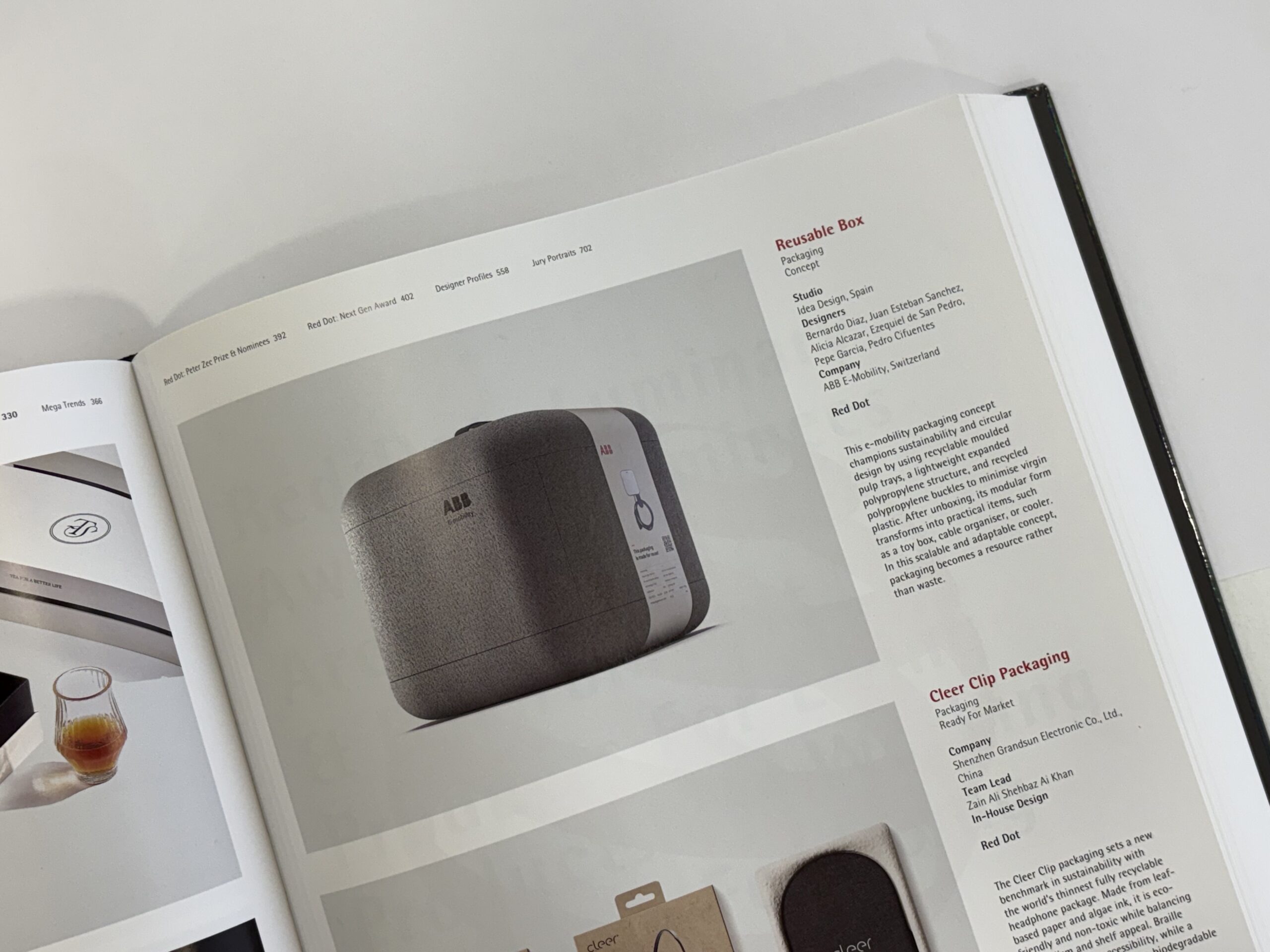
    This recognition was awarded to our packaging for ABB Mobility’s electric vehicle charger. A project where sustainability, usability, and user experience converge into a solution designed to simplify and transform access to electric mobility.

    Beyond the Award: What We Took from Germany

    • Strategic connections: We built valuable relationships with teams who share our vision of design as a driver of change.
    • Global validation: Being recognized by the German Design Council strengthens our international positioning and opens new opportunities.
    • Inspiration for the future: Seeing where design is heading motivates us to keep exploring, questioning, and creating.

    Let’s Keep Designing the Future, Together

    This award is not just a milestone—it’s a push to keep moving forward. At IDEA Design, we believe in the power of design to transform industries, create impact, and improve people’s lives.

  • Design Mindset in Action: Reflections from the Radio.

    Design Mindset in Action: Reflections from the Radio.

    Not every day do we get the chance to pause and reflect on what we do—and, more importantly, why we do it. At IDEA, we took on the challenge of distilling our essence into just ten minutes of radio. How can we convey who we are, what we do, and the impact we aim to create in such a short time?

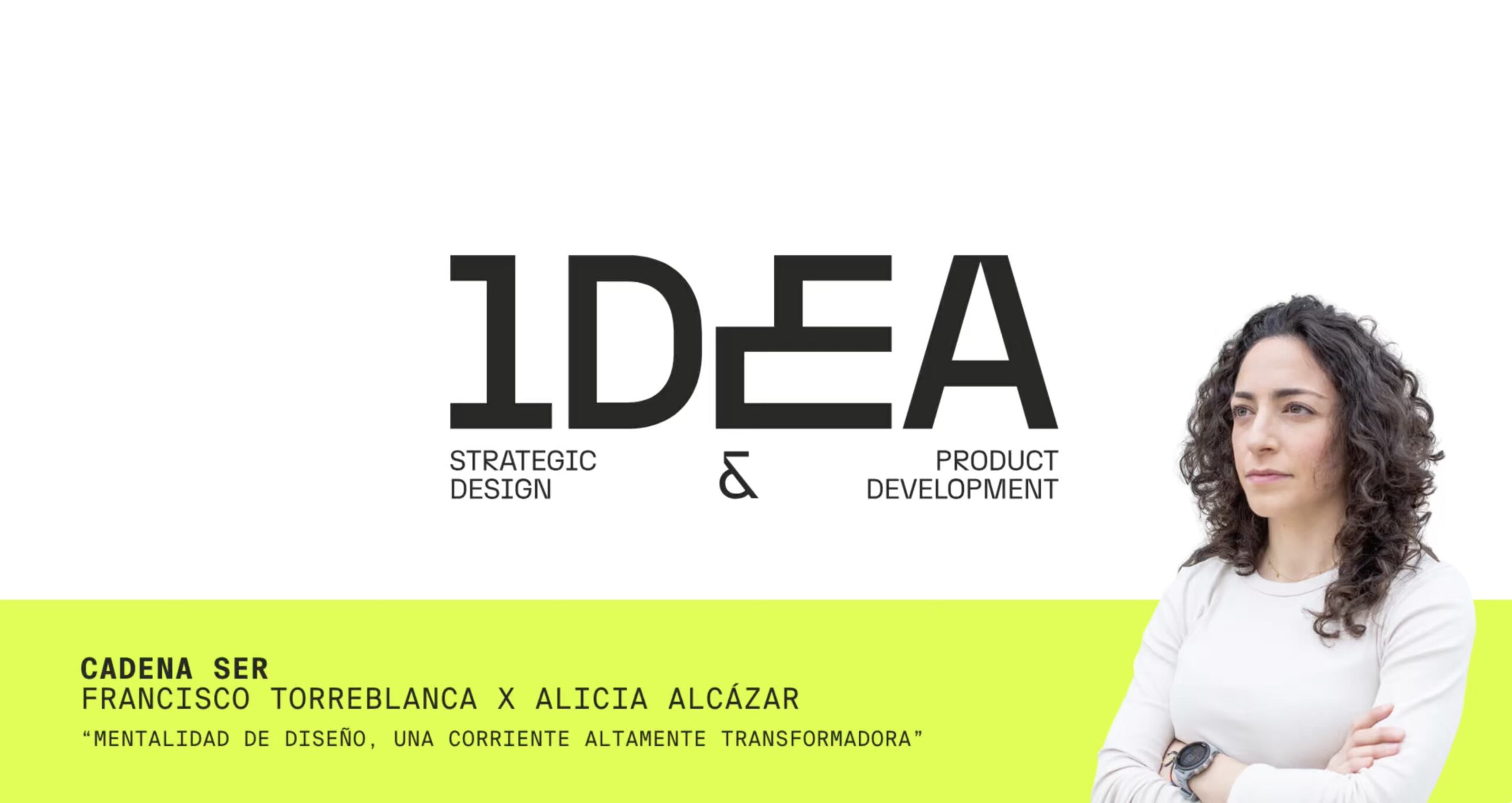
    On January 24th, our colleague Alicia Alcázar took this mission to the microphone at Cadena SER. In a candid and authentic conversation, she shared how design can transform ideas into meaningful experiences. More than just a discipline, design is a tool that can reshape realities and improve people’s lives.

    Design Mindset: More Than a Profession, a Way of Thinking

    When we work with a Design Mindset, the lines between work and passion blur. It’s not just about solving problems—it’s about anticipating them, discovering opportunities, and challenging the status quo. We are driven by curiosity, empathy, and the desire to create meaningful innovations.

    Design is a responsibility. Every decision we make impacts the experience of those who interact with our products and services. And the fascinating part? We are not just designers; we are also users. How often have we felt frustrated by a product that doesn’t work as expected? Good design is seamless—it makes life easier without being noticed. If friction is felt, something went wrong in the design process.

    Designing for People, with People

    Recording the radio segment was a live example of how we apply the Design Mindset in any context. From planning to execution, every detail was considered to ensure a smooth experience. Yes, there were nerves, and yes, there were unexpected challenges, but in the end, preparation and authenticity made everything fall into place.

    Design is not just about aesthetics; it’s about impact, functionality, and improving people’s lives. At IDEA Design Mindset, we believe in the transformative power of design. We help our clients discover new possibilities, reimagine their present, and build a future with purpose.

    Design doesn’t just solve problems—it creates opportunities. And you? How do you experience the impact of design in your daily life?


    Listen to the full conversation on Cadena SER here: https://www.youtube.com/watch?v=wnUKvLQUzLQ&t=1s 

  • From 2024 to 2025: The “Ins and Outs” of Strategic Design.

    From 2024 to 2025: The “Ins and Outs” of Strategic Design.

    In November 2024, we co-participated alongside Redflexion in the VI Foro CInteligencia Castellón 2024, organized by the Cámara de Comercio of Castellón. This event brought together experts from various sectors to explore how design, technology, and innovation are transforming international business. Juan Esteban Sánchez, co-founder of IDEA Design, represented the team at this event, where he shared leadership with Anselmo, CEO of Redflexion, during the Networking Creative – SPRINTS session: “Adapting Business for Internationalization.”|The forum reflections confirmed what we already anticipated: design is not just an aesthetic element, but a key tool that emotionally connects with consumers and strengthens the value proposition of brands in international markets.

    Through the discussions and the new methodologies presented, we understand that innovation in design is no longer an option but a necessity to adapt and excel in the global market. So…

    In 2025, what should continue, and what should be left behind in the world of strategic design?


    The “Ins” of 2025:

    -Comprehensive Design: Not just following trends, but anticipating them and aligning them with global goals.

    -Constant Innovation: Design must be both functional and emotionally relevant, becoming a key business tool.

    -Design as a Strategic Asset: Seeing design as an essential part of the international strategy, opening new global opportunities.

    -Evaluating Design Scenarios: Investing intelligently in design and measuring its impact on internationalization.


    The “Outs” of 2025:

    -Reactive Design: Following trends is no longer enough; we must be proactive and visionary.

    -Superficial Design: Design must be functional, not just aesthetic.

    -One-Dimensional Approach: Design must be comprehensive, not just a marketing tool.

    Innovation and New Opportunities for the Future: The Mindset That Will Transform Strategic Design in 2025

    Artificial intelligence and other innovative tools are transforming internationalization. At IDEA Design Mindset, we are committed to new methodologies to anticipate the future and create design solutions that truly connect with consumers.

    2025 is an opportunity to redefine global design. Embrace the Ins and leave the Outs behin